
CASE STUDY · DBS PAYLAH! INTERACTIVE WEB DEMO
Beyond the Pay Button
Exploring how people learn unfamiliar features, and how guided practice can help them discover more from an app they already use.
CLIENT
DBS Bank
MY ROLE
Experience Designer (Research)
TIMELINE
2026
METHODS
Desktop research, survey, in-depth interviews
WHO WE HEARD FROM
320 survey respondents and 6 interviewees aged 45 to 60+
The challenge
How do you help people discover what an app can do when they already think they know how to use it?
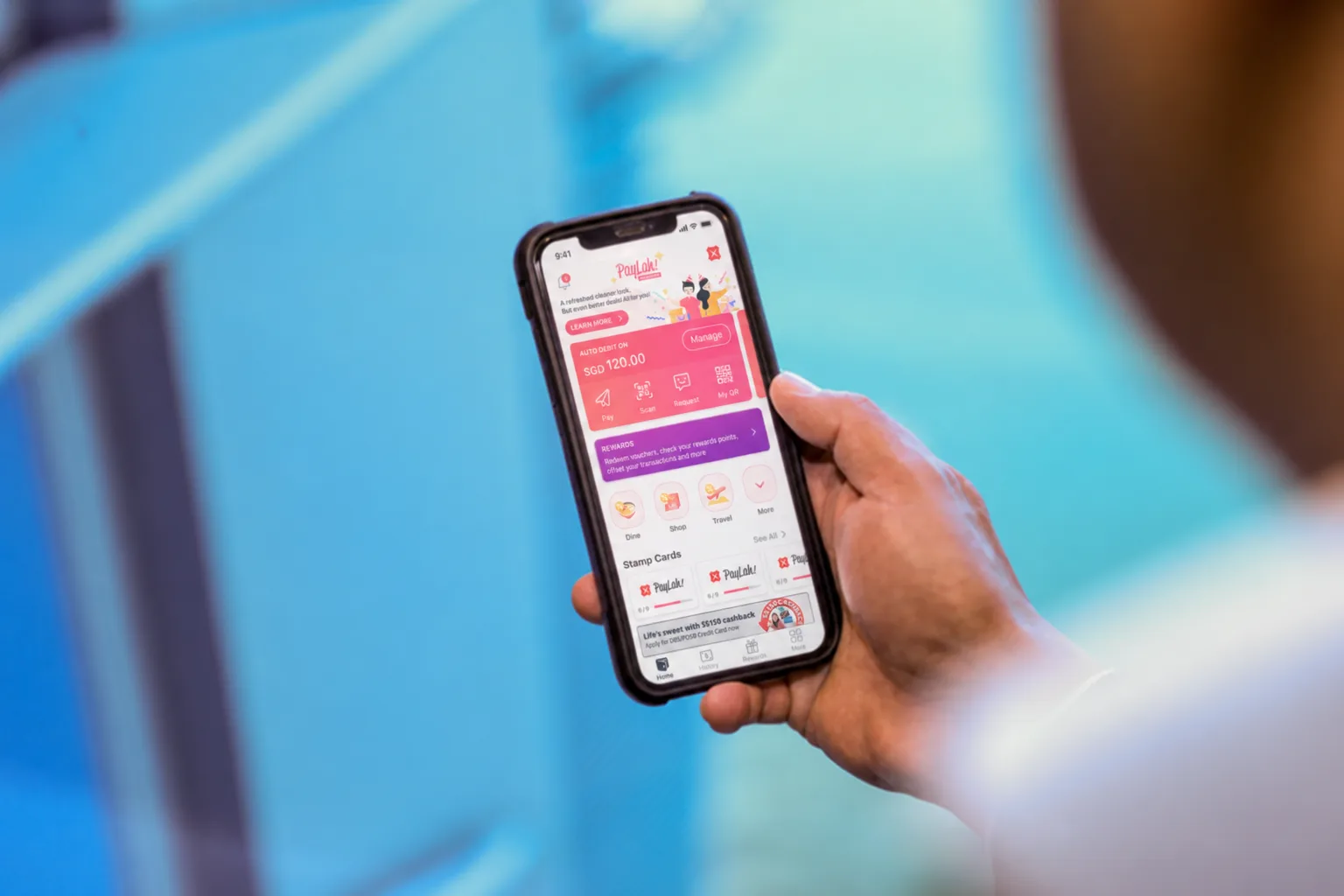
DBS PayLah! is a familiar payment app for many Singaporeans. But being comfortable with an app doesn't necessarily mean knowing everything it offers. The project involved developing an interactive website demo where users could explore selected PayLah! features through simulated customer journeys, without needing to make real transactions.
The challenge wasn't simply teaching people where to tap. We needed to understand how people learn unfamiliar features, what motivates them to explore beyond their usual habits, and how to make learning feel approachable rather than overwhelming.
THE QUESTION WE HAD TO ANSWER
How could we create something that people would actually want to learn from, rather than another tutorial they'd skip?
What I did
01
Desktop research
02
Survey
03
In-depth interviews
04
Synthesis
Understanding how people learn
Before designing a learning experience, we needed to understand what makes learning work.

01
Desktop research
Studying existing digital learning experiences, guided simulations and self-service platforms to understand effective learning patterns.
02
Market survey
Exploring users' payment habits, feature awareness, learning preferences and common frustrations with digital tutorials.
03
In-depth interviews (IDIs)
Exploring how different users approach unfamiliar features, including their confidence, expectations and need for guidance.
04
Consolidated report
Bringing the desktop research, survey and interviews together into core insights and prioritised design recommendations.
WHERE I CAME IN
I led the desktop research and survey work, helped develop the interview guide and moderated research sessions alongside the product design team.
I was also responsible for bringing the research findings together so that insights from different methods could inform the evolving design.
Core discoveries
What the research uncovered about how people learn, and what it meant for the demo.
DISCOVERY 01
Familiar doesn't always mean knowledgeable
One of the most interesting findings was the gap between using an app confidently and knowing what else it can do.
When analysing our survey, I noticed that many respondents were already comfortable using digital payment apps. Yet familiarity with everyday payment functions didn't necessarily extend to other features. It raised an interesting question.
AN INTERESTING QUESTION
If someone has been using an app for years, what would make them curious enough to explore something new?
The research also highlighted differences in how people approach learning.
SOME PREFER
Figuring things out independently.
OTHERS APPRECIATE
Clear, step-by-step guidance.
WHAT EVERYONE SHARED
But regardless of their preferred learning style, people generally wanted to understand why something was useful before investing time in learning it.
This helped us think beyond simply presenting a catalogue of tutorials. Instead, we needed to consider how the experience could introduce unfamiliar features in ways that felt relevant to people's everyday needs.
DISCOVERY 02
Finding the balance between guidance and freedom
Just because guidance is available doesn't mean people want to follow it.
One of the challenges was understanding how much guidance people actually needed. Our desktop research explored everything from hands-on learning platforms to self-service tools and gamified experiences. While many used progress indicators, rewards or step-by-step instructions, not every approach was appropriate for a financial application.
The survey helped us examine those patterns in the context of our intended users.
PEOPLE APPRECIATED
Knowing what to do next.
IT FELT LIKE A CHORE WITH
Lengthy instructions, unnecessary steps and excessive animations.
This created an interesting design challenge.
THE DESIGN CHALLENGE
How do we guide someone who needs help without slowing down someone who prefers to explore independently?
And how do we make an experience feel engaging without adding features that distract from the actual learning?
WHAT I LEARNT
I learnt that good guidance isn't necessarily about explaining more. Sometimes, it's about knowing what to leave out.

From research to design
The goal wasn't to make learning more entertaining. It was to make it easier to understand.

As the research progressed, we started identifying principles that could help shape the learning experience.
PRINCIPLE 01
Focus on one task at a time
Rather than expecting users to complete lengthy tutorials, the experience needed to allow them to focus on individual tasks.
PRINCIPLE 02
Explain why it matters
Rather than introducing unfamiliar features through terminology alone, it needed to explain why those features might matter.
PRINCIPLE 03
Reinforce what was learnt
And instead of simply ending after the final interaction, each journey needed to reinforce what the user had learnt.
The desktop research helped establish these initial directions, while the survey provided additional evidence to refine and prioritise them.
THE CONSOLIDATED REPORT
The report brought the three studies together into seven core insights and eleven design recommendations, ranked by priority, so the design team knew what to fix first.
ALREADY IN THE DESIGN
Some of these principles were already reflected in the developing design, including guided interactions, completion recaps and opportunities to explore related journeys.
MY ROLE
My role was to connect the findings across research activities, identify where the evidence supported or challenged our initial assumptions, and communicate what these discoveries meant for the design team.
Research helped us move beyond asking what features to demonstrate, towards understanding how people would learn from the experience.
Overcoming challenges: Reaching the people who needed help most
What happens when the people you need to understand are the hardest people to recruit?
One of our biggest challenges came during participant recruitment.
THE CHALLENGE
Finding the participants we needed
While our survey successfully reached digitally active respondents, we struggled to find participants who rarely or never used PayLah! specifically because they found it difficult to use.
We were also looking for participants who were more comfortable communicating in Mandarin, particularly those who might struggle with English-language interfaces.
WHAT WAS GETTING IN THE WAY
But there was a problem with how we were reaching them. Our recruitment screener was an English-language form distributed on a digital platform. We were essentially using a digital platform to recruit people who might struggle with digital platforms in the first place.
Someone who wasn't comfortable reading English or navigating online forms was less likely to encounter or complete our screener. This made finding suitable participants particularly difficult.
THE CHALLENGE
Age didn't tell us who needed help
Another challenge was that age didn't necessarily reflect digital confidence.
WHAT WE REALISED
While we initially looked towards older adults as a potential group requiring more guidance, many seniors were already comfortable performing everyday payment tasks. Being older didn't automatically mean someone struggled with PayLah!, just as being younger didn't necessarily mean someone understood every feature.
We needed participants who genuinely experienced the behaviours and difficulties we wanted to investigate, not simply people who fitted an age category.
THE CHALLENGE
Recognising the limitations of our approach
We weren't able to fully overcome this recruitment challenge within the study.
WHAT WE DID
Rather than assume our participant group represented everyone, we acknowledged the limitations of our recruitment approach and remained careful about how broadly we interpreted the findings.
It was also an important lesson for future research.
FOR FUTURE RESEARCH
If we want to understand people with lower digital confidence or different language preferences, we need to think more carefully about where and how we reach them.
Future studies could benefit from alternative recruitment channels, more accessible screeners and approaches that don't assume participants are already comfortable using digital platforms.
THE LESSON
Recruitment isn't just about finding people who meet our criteria. It's also about making sure our methods don't unintentionally exclude the very people we're trying to understand.

Looking back
Understanding how people learn starts with understanding who we're actually hearing from.
Perhaps one of my most valuable lessons came from the recruitment process itself. Our difficulty reaching less digitally confident and Mandarin-dominant participants made me realise how easily conventional research methods can unintentionally exclude certain users. It challenged me to think more carefully about who our research represents, how our recruitment choices influence the evidence we collect, and when we need to acknowledge gaps rather than make assumptions.
The project also reinforced something I've come to appreciate about designing learning experiences.
MY BIGGEST TAKEAWAY
Helping people learn isn't always about giving them more information. It's about understanding what makes learning difficult for them in the first place.
Sometimes that means simplifying instructions or allowing people to explore at their own pace.
And sometimes, it means recognising that the people who could benefit most from our research might be the very people our usual methods struggle to reach.
NEXT PROJECT
Money Town