
CASE STUDY · MONEY TOWN
When playing isn't the same as learning
How five months of testing with children helped shape an interactive financial literacy experience.
CLIENT
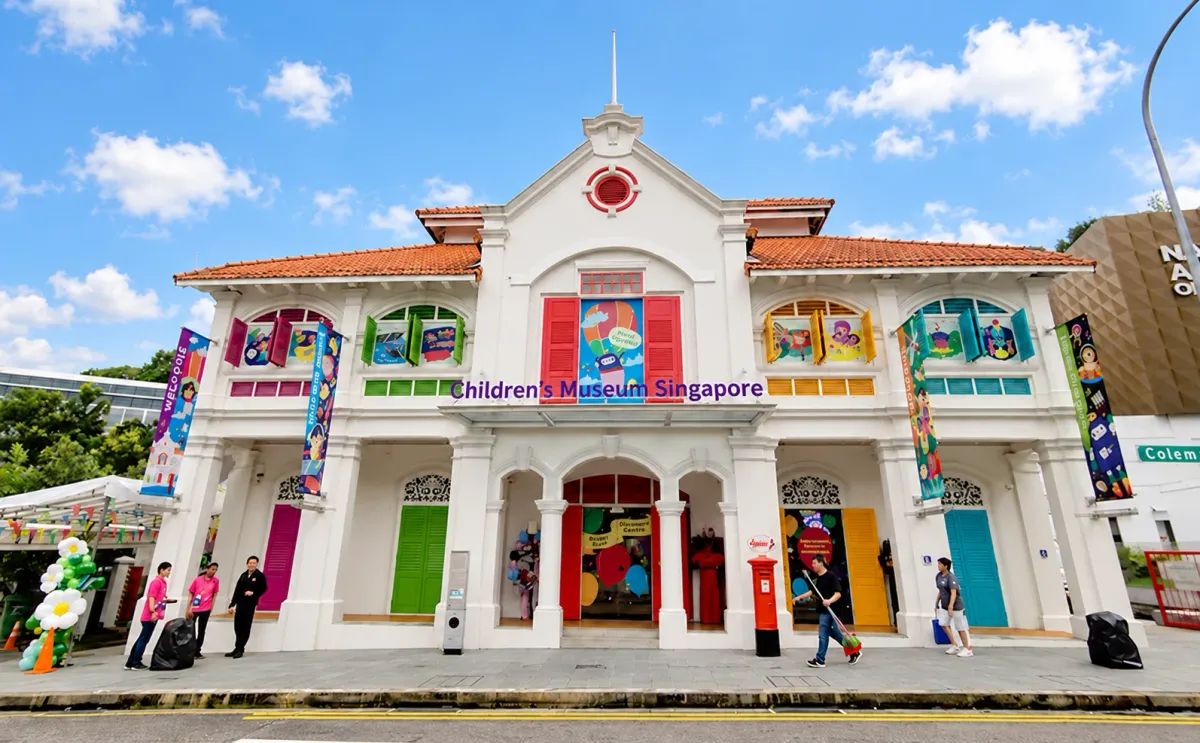
Children's Museum Singapore
MY ROLE
Lead UX Researcher
TIMELINE
May to September 2026
METHODS
Exploratory survey, guerrilla testing
WHO WE HEARD FROM
118 survey respondents, then children aged 5–12 across three rounds
The brief
Can children really learn about money through play?
Money Town is an upcoming interactive financial literacy experience. It introduces children to earning, saving, spending, borrowing and investing.
But teaching financial concepts to children aged 5–12 is an interesting challenge. How do you explain something as abstract as stocks, loans or delayed gratification to a child who may not even know the words?
THE QUESTION WE HAD TO ANSWER
Can children learn these concepts naturally through gameplay, without someone explaining everything to them?
We had our own expectations about what each age group might understand. But assumptions could only take us so far. We needed to put the games in front of children and see what they actually understood.
What I did
01
Exploratory survey
02
Guerrilla testing
03
Synthesis
Starting with the people
Before testing the games, we needed to understand the people who would play them. In May 2026, I developed a survey to learn how families and educators experience children's museums, what makes interactive exhibits enjoyable, and what commonly gets in the way.
The survey also helped us find suitable participants for testing. It showed us what parents and educators valued, but their expectations could only tell us so much. We still needed to see how children behaved.
Three rounds, three purposes
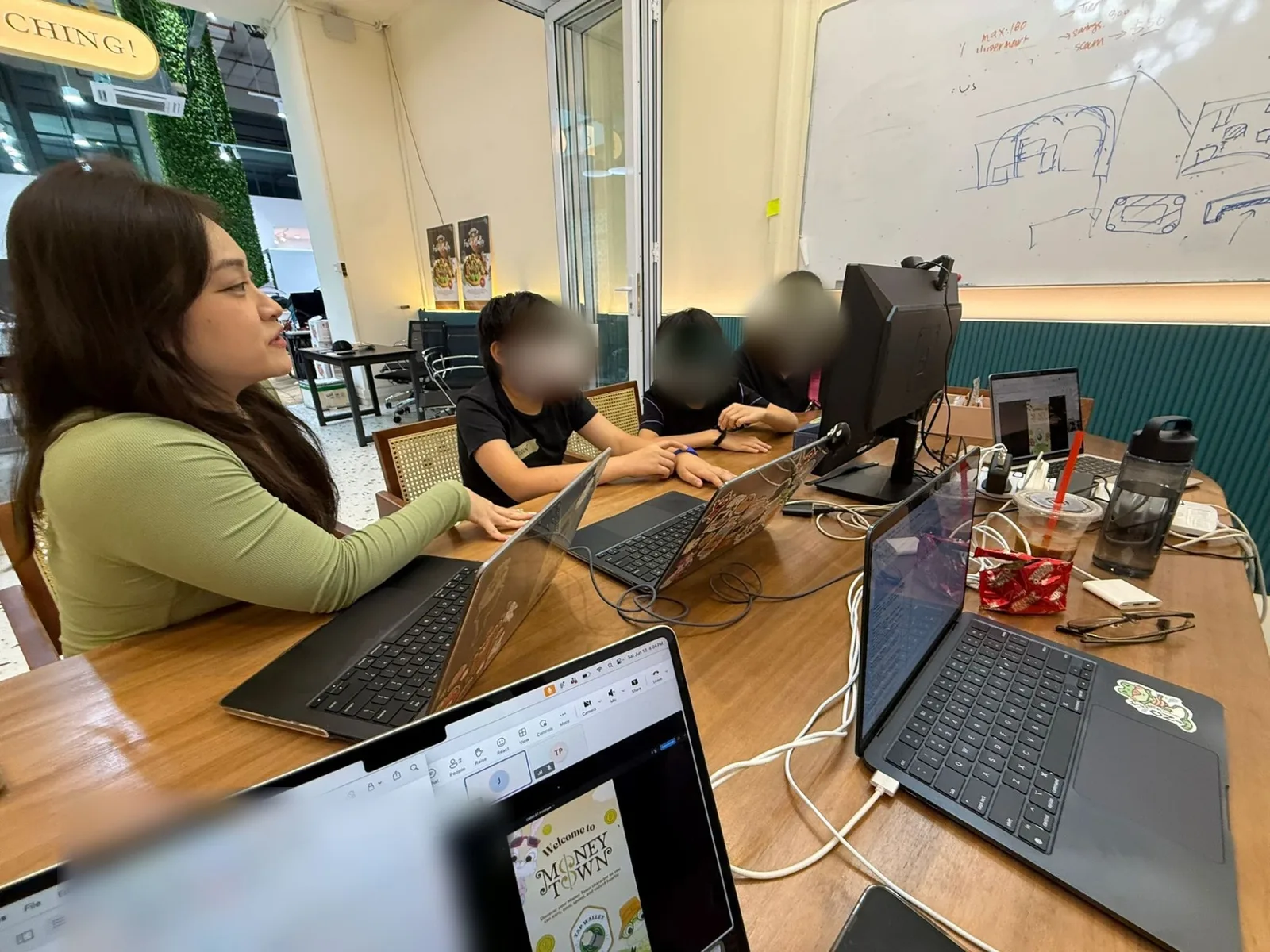
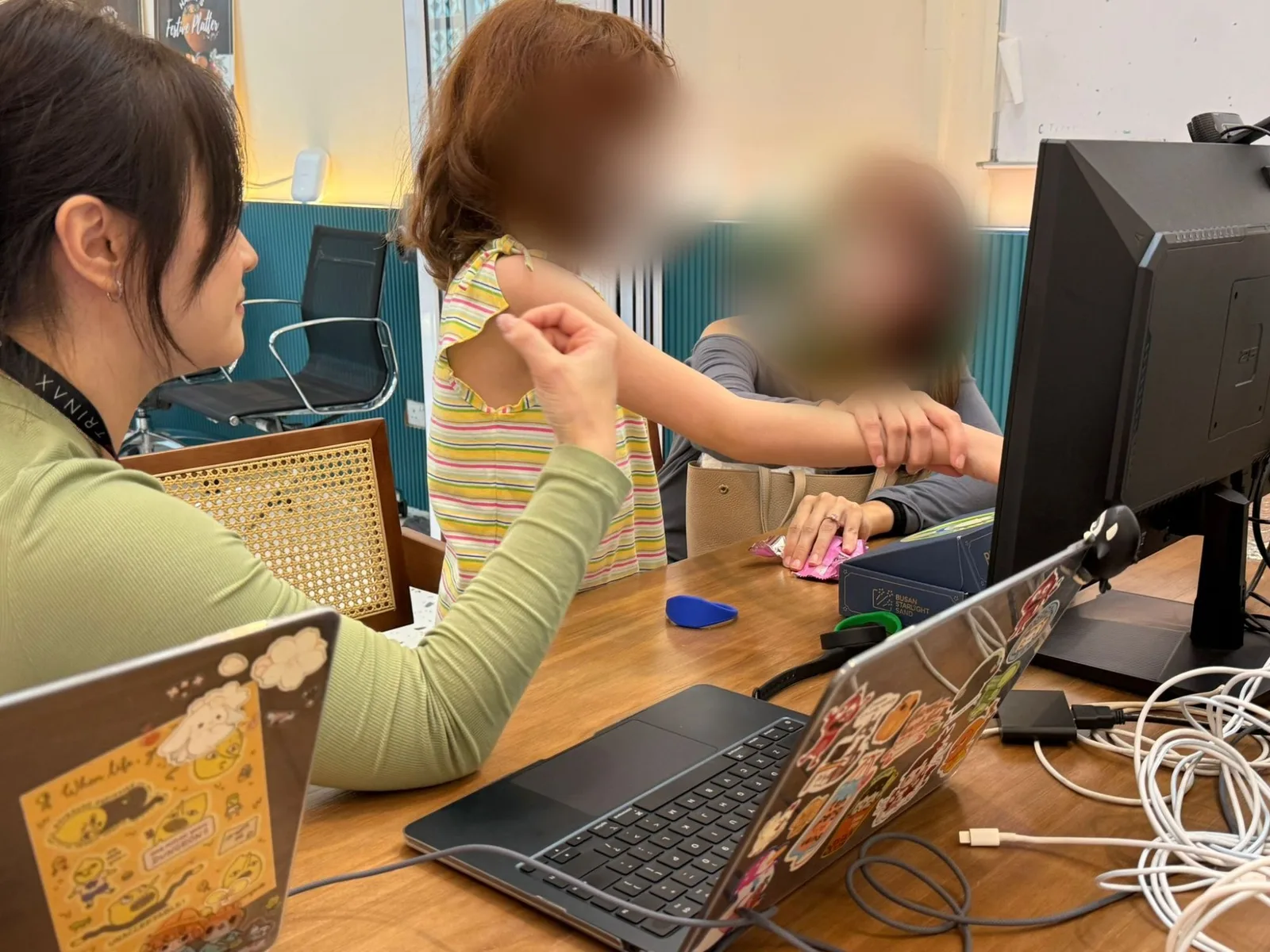
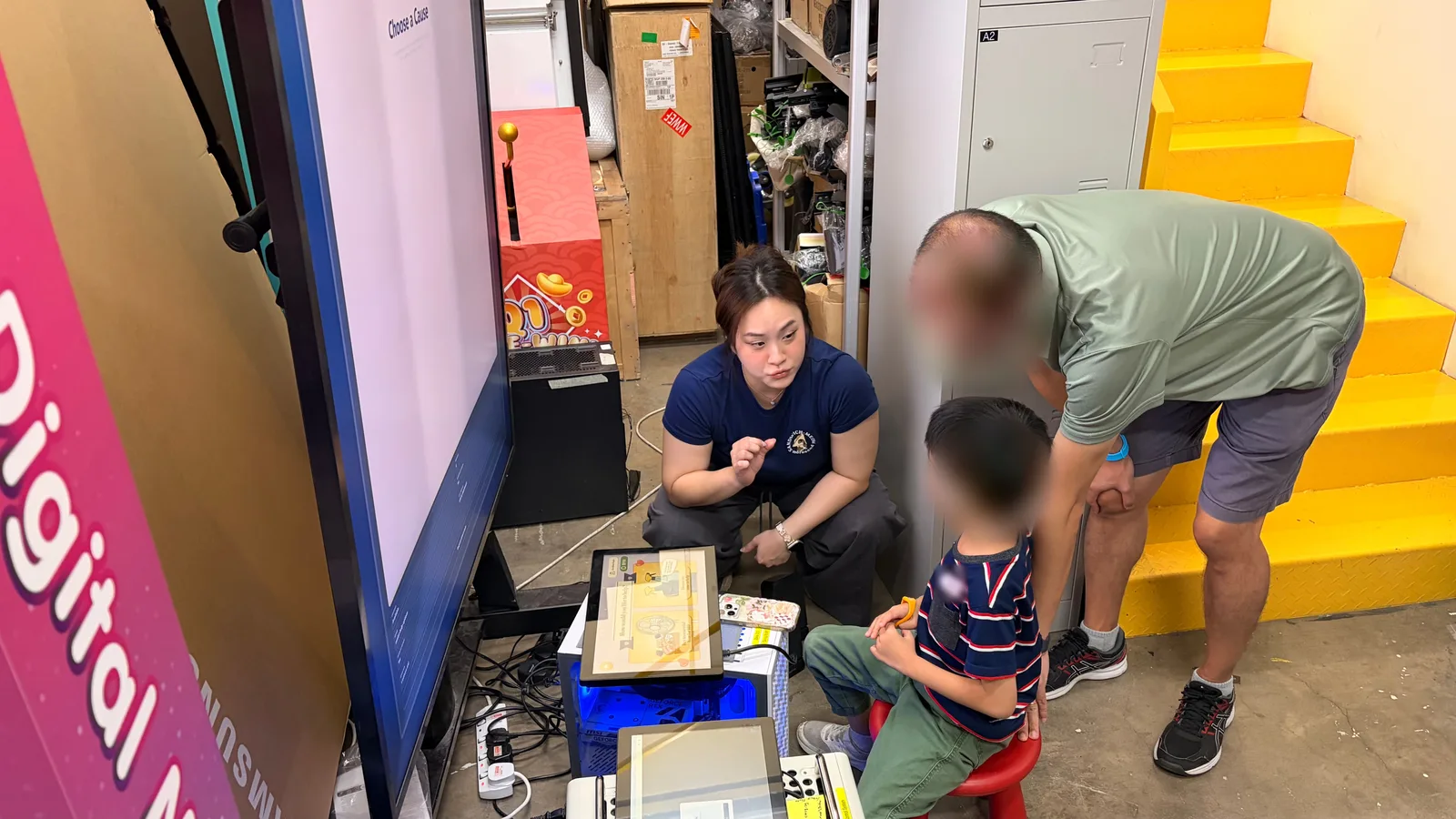
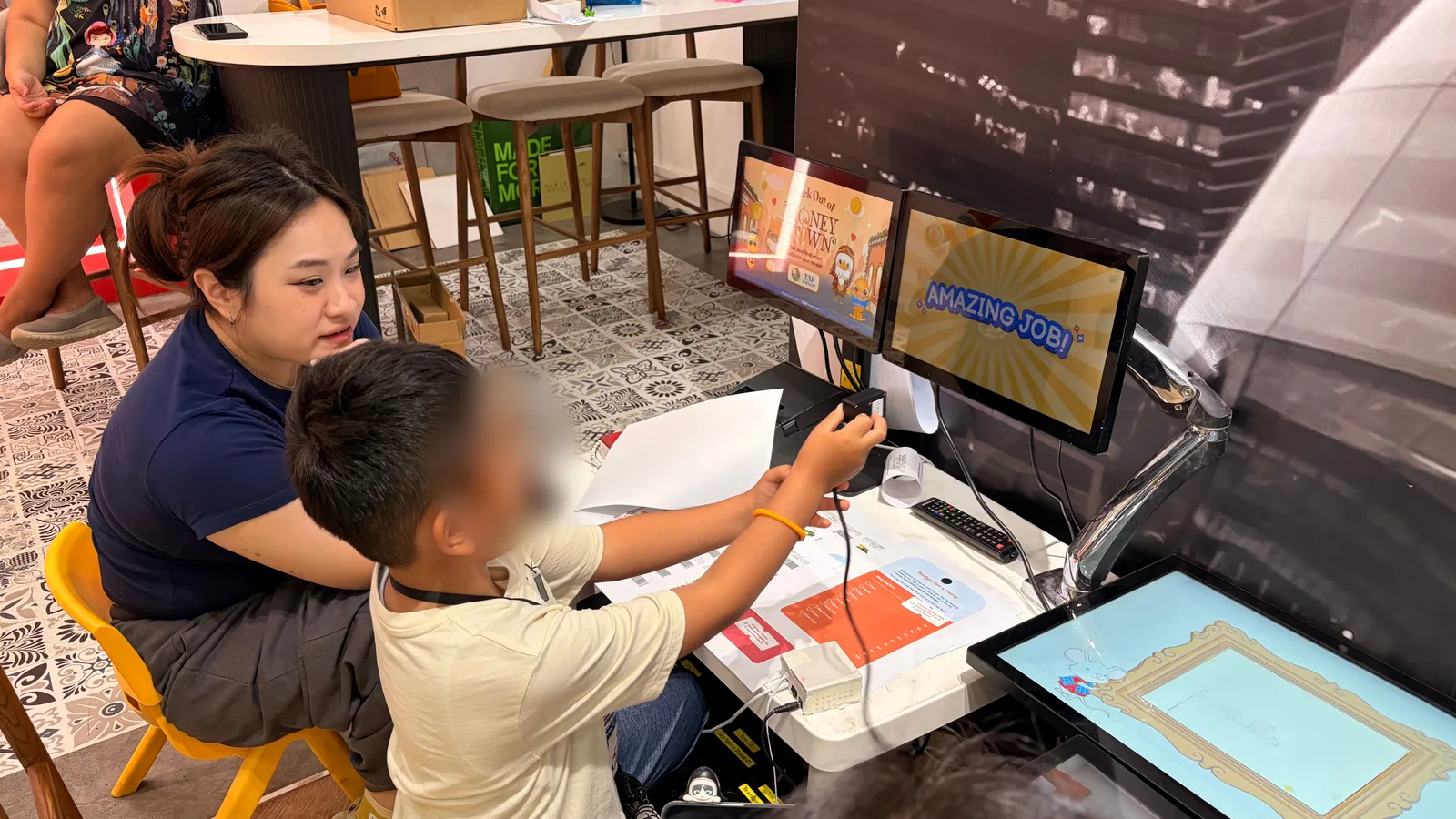
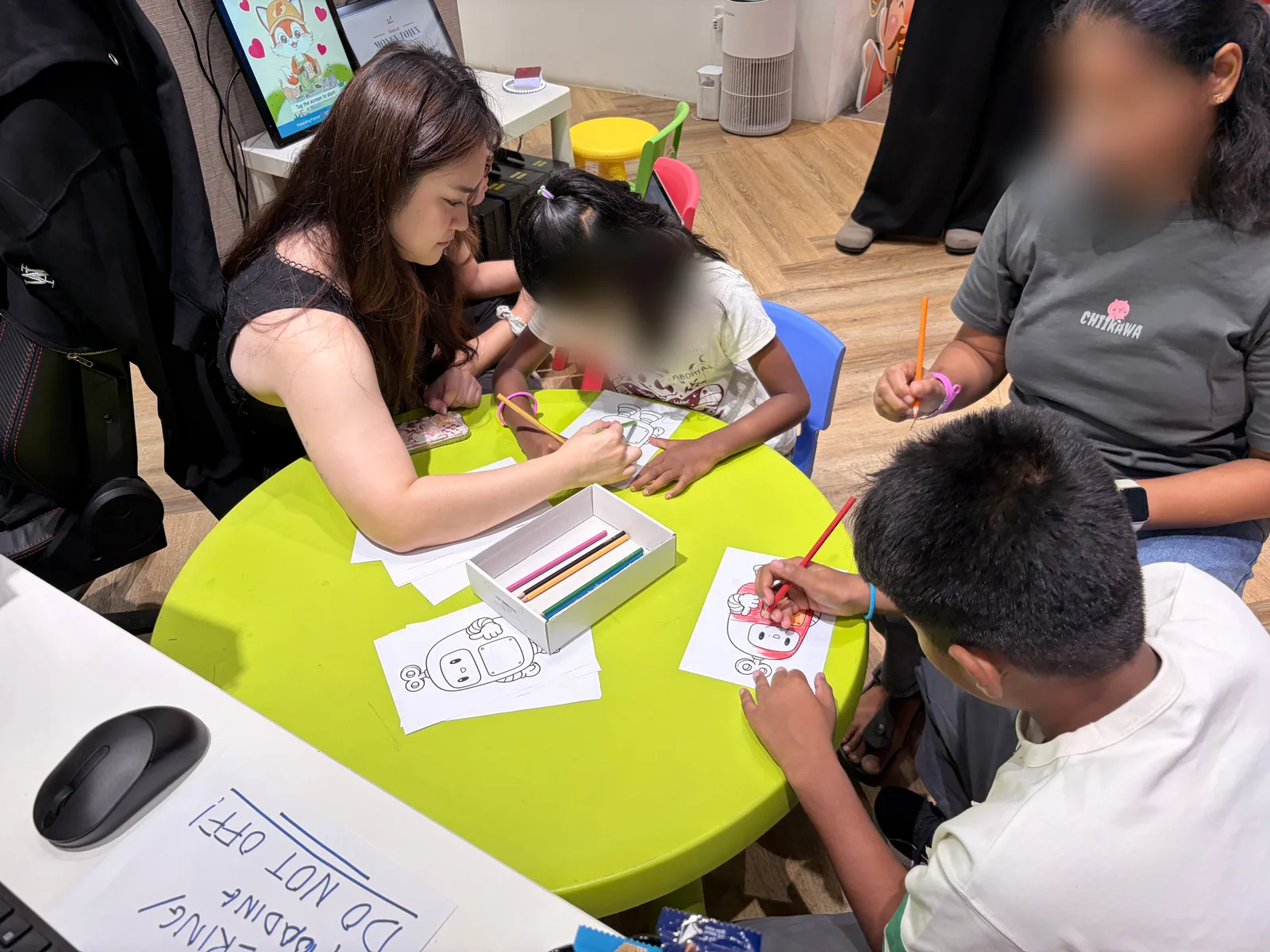
I led three rounds of moderated guerrilla testing with children aged 5–12, alongside parents and educators.
Exploring the ideas
Early digital prototypes and physical mock-ups. Did children understand the interactions, the financial concepts and the overall journey?
Testing the refinements
Did the design changes improve clarity, and could children grasp more complex concepts through gameplay?
Bringing it all together
Functional kiosks, animated games, sound effects and physical interactions. What still needed attention before launch?
Core discoveries
What the children showed us, and what it meant for the design.
DISCOVERY 01
What the children taught us
Children surprised us with how much they knew, and how much they could learn through play.
THE BIG DISCOVERY
Children could make sense of unfamiliar money concepts through the games themselves.
Children approached financial concepts in very different ways. What stood out most was watching them begin to understand new ideas simply by playing.
SOME ALREADY KNEW A LOT
They had a surprisingly good understanding of money. They could explain loans, recognise financial consequences and make decisions based on what they knew.
OTHERS WERE BRAND NEW TO IT
They were meeting these concepts for the first time, and worked them out as they played.
Learning through play, in action
Saving
Children who didn't understand the word "deposit" could still see that putting money aside allowed it to grow.
Prices
Others learnt to connect changing conditions with rising or falling prices through visual examples.
Waiting for a bigger reward
Some understood that waiting longer could lead to a bigger reward, and chose to wait instead of collecting right away.
"I will wait because I want more money."
Participant, aged 7
They didn't always need to understand the financial terms first. Sometimes, understanding came from seeing what happened when they made a decision.
DISCOVERY 02
Where children still needed help
Not every game worked, and not every child understood every concept. Some completed transactions without fully recognising whether they had made a profit or a loss. Others needed more guidance, clearer feedback or extra examples.
"Not sure... I see the hamster only."
Participant, aged 7
WHAT THIS MEANT FOR THE DESIGN
The goal became making complex ideas understandable through actions, consequences and feedback that children could relate to.
This shaped how we refined the experience in the rounds that followed.
Turning research into decisions
Finding problems was only half the job. After each round, I turned observations into findings, insights and recommendations. My final report helped the creative team build an impact-prioritisation matrix across the exhibit touchpoints.
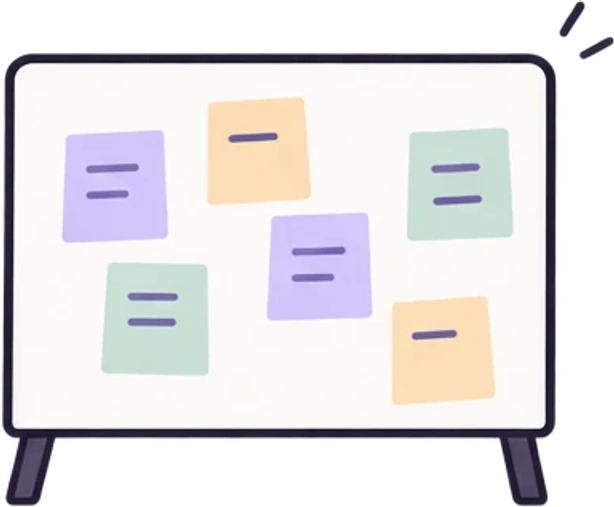
What should we fix now?
Changes that could greatly improve the experience with relatively little effort.
What needs more thought?
Bigger improvements that may need more development or post-launch refinement.
What's already working?
Interactions that showed enough clarity to keep as they are.
Instead of handing the client a long list of problems, the team could explain which changes mattered most and how we proposed to move forward.
Impact: When testing became part of the conversation
One of the most rewarding parts of this project was seeing how the client's relationship with research changed.
AT THE START
There were questions about how much time to spend on testing and discussing findings.
AFTER ROUND 1
The findings uncovered issues that weren't obvious from reviewing the designs internally.
MID-PROJECT
The client began asking us to test more ideas with children, instead of relying on what seemed logical on paper.
LATER ROUNDS
The client came down to our weekend sessions to watch the children and take their own notes.
The value wasn't just in the reports. It was in helping the team see the experience through the eyes of the children who would eventually use it.
Overcoming challenges
This was my first time researching with children, and I quickly learnt that moderating children is a completely different experience from moderating adults.
The challenge was finding a balance between being approachable and remaining a neutral moderator.
THE CHALLENGE
Children don't always say what they think
Some are very vocal, others explore quietly. Some enjoy answering questions, others would rather get back to playing.
WHAT I DID
I made sessions feel like conversations, not examinations. Instead of asking if they liked something, I asked children to show me what they would do, explain what they thought was happening, or explore what caught their eye.
THE CHALLENGE
Keeping attention without pressure
Children lose interest or get distracted, and quieter ones can shut down if pushed.
WHAT I DID
I learnt to read their behaviour and decide in the moment whether another question would teach us something or if it was time to move on. With quieter children, I used simple language, playful curiosity and gentle prompts that didn't suggest an answer.
THE CHALLENGE
Siblings changed the dynamic
Older siblings sometimes took the lead, explaining instructions or answering for younger ones.
WHAT I DID
I included both sibling pairs and individual children, so one family dynamic didn't stand in for everyone.
THE CHALLENGE
Designing for every child
Our first round included a child with additional support needs.
WHAT I DID
It reinforced the importance of flexible pacing, accessible interactions and involving caregivers in the right way.
THE CHALLENGE
Late-stage testing with little room to change
By September, some experiences were already coded, while others still had incomplete functionality or technical issues.
WHAT I DID
I carefully separated real usability problems from limitations of the prototype, and focused the team on which issues were worth fixing right away.
"The research objectives stayed the same. How we reached them depended on the child."
Looking back
Five months of testing taught me that children are capable of much more than we sometimes expect.
When I started this project, I had never moderated research with children. I quickly learnt that they don't always respond the way adults do. Some are very vocal, others are quieter, and every child brings their own personality, interests and understanding into the session.
What surprised me most was watching children make sense of financial concepts through play. A child might struggle to explain a financial term, yet make a perfectly reasonable decision when the concept came up in a game. Another might already understand something we assumed was too advanced for their age.
We can make educated guesses about what people understand, but we won't always know what they're capable of until we give them the chance to show us.
This project taught me to be more adaptable as a moderator, more observant of behaviour, and more careful about judging understanding by vocabulary alone.
MY BIGGEST TAKEAWAY
Learning doesn't always need to begin with an explanation. Sometimes, it begins with curiosity, experimentation and the freedom to discover something for yourself.

NEXT PROJECT
ICA 25th Anniversary Gallery